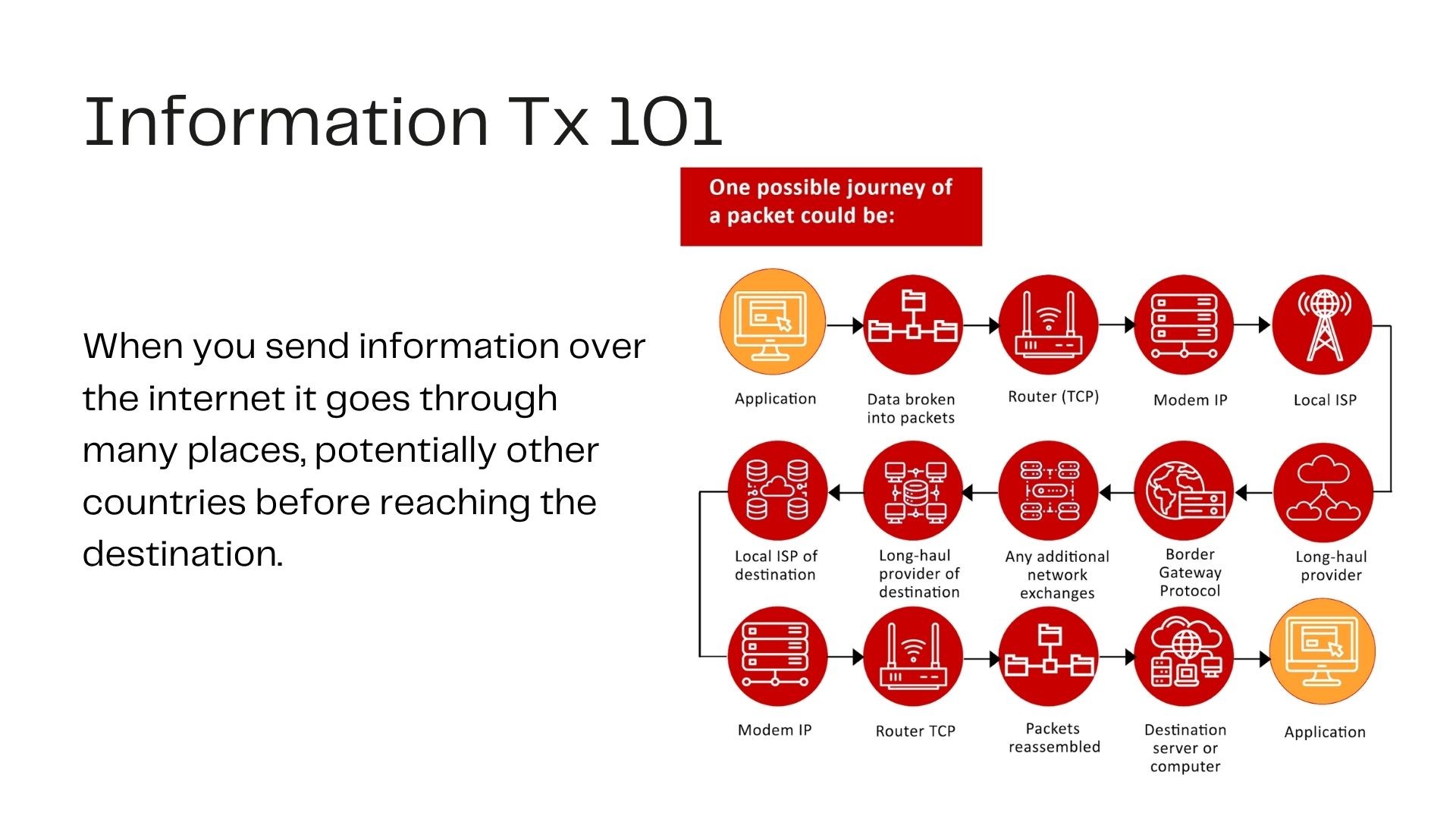
Let's start with the basics. When you send a message — a text, an email, a tap of a heart on Instagram — that data doesn't teleport. It gets chopped into packets. Those packets bounce through your router, your modem, your ISP, out to long-haul providers, possibly through other countries, and then back through someone else's ISP, modem, and router before getting reassembled on the other end.
It's a beautiful system. It's also a lot of moving parts. And every one of those parts is a place where things can go wrong.
Here's a real example. An email gets sent from Guadalajara, Mexico, to Washington, D.C. The green path is what should happen — short hop through Texas, up to the East Coast. Instead, the actual path was through London, Moscow, Minsk, Frankfurt, then back to D.C.
This is called BGP hijacking. The internet's routing protocol mostly runs on trust, and sometimes that trust gets… abused. Most people never notice. But the traffic in this case came from government addresses and big financial institutions. So that's a problem.
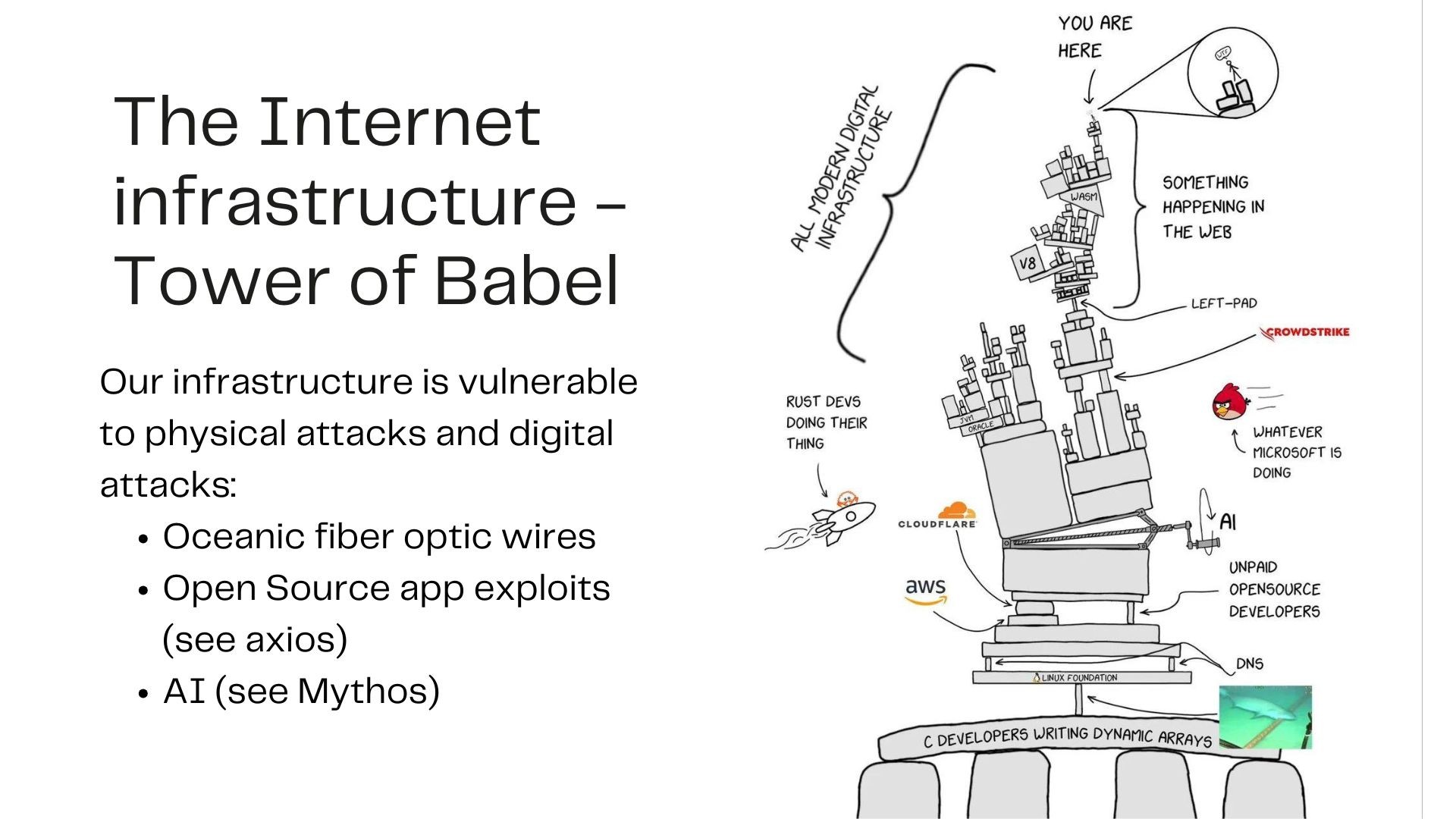
I love this cartoon because it captures something true. Our entire modern digital infrastructure is balanced on a tower of dependencies, and it's wobbling.
Some of those wobbles are physical — undersea fiber cables get cut by anchors, or sharks, or sabotage. Some are software — a single open-source library can take down half the internet (remember left-pad? Or more recently, the axios stuff). And some are this new category where AI-generated code and AI-driven attacks are creating attack surfaces we haven't even fully mapped yet.
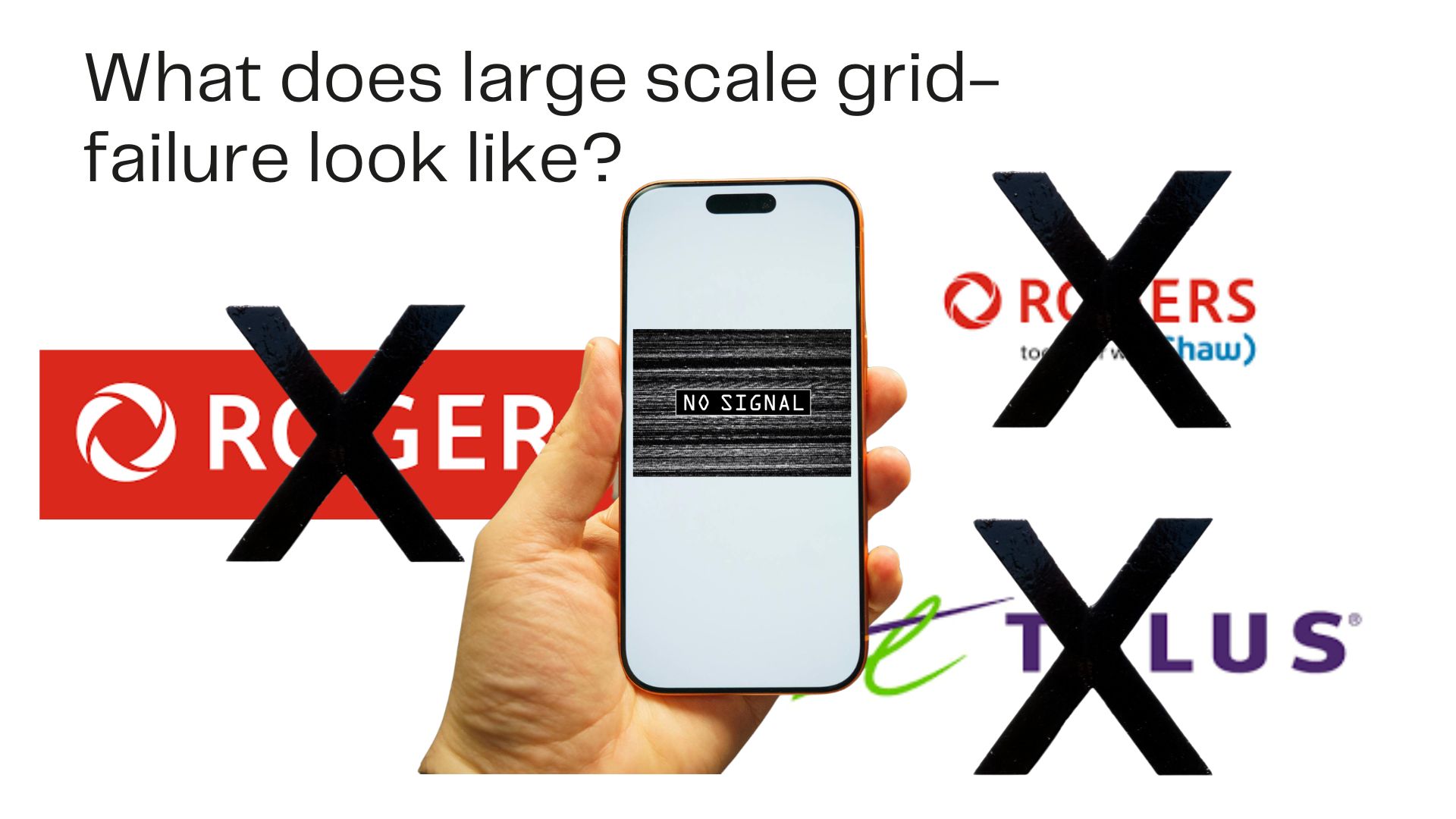
Calgarians, we don't have to imagine very hard. Remember the Rogers outage a few years back? Half the country's debit machines stopped working. People couldn't reach 911. ATMs went dark. And that was one provider having one bad day.
Now picture Rogers, Telus, and Bell all down at the same time. Whether from a cyberattack, a coordinated physical attack, or just a really nasty cascading software failure. What's the backup plan? For most of us — there isn't one.
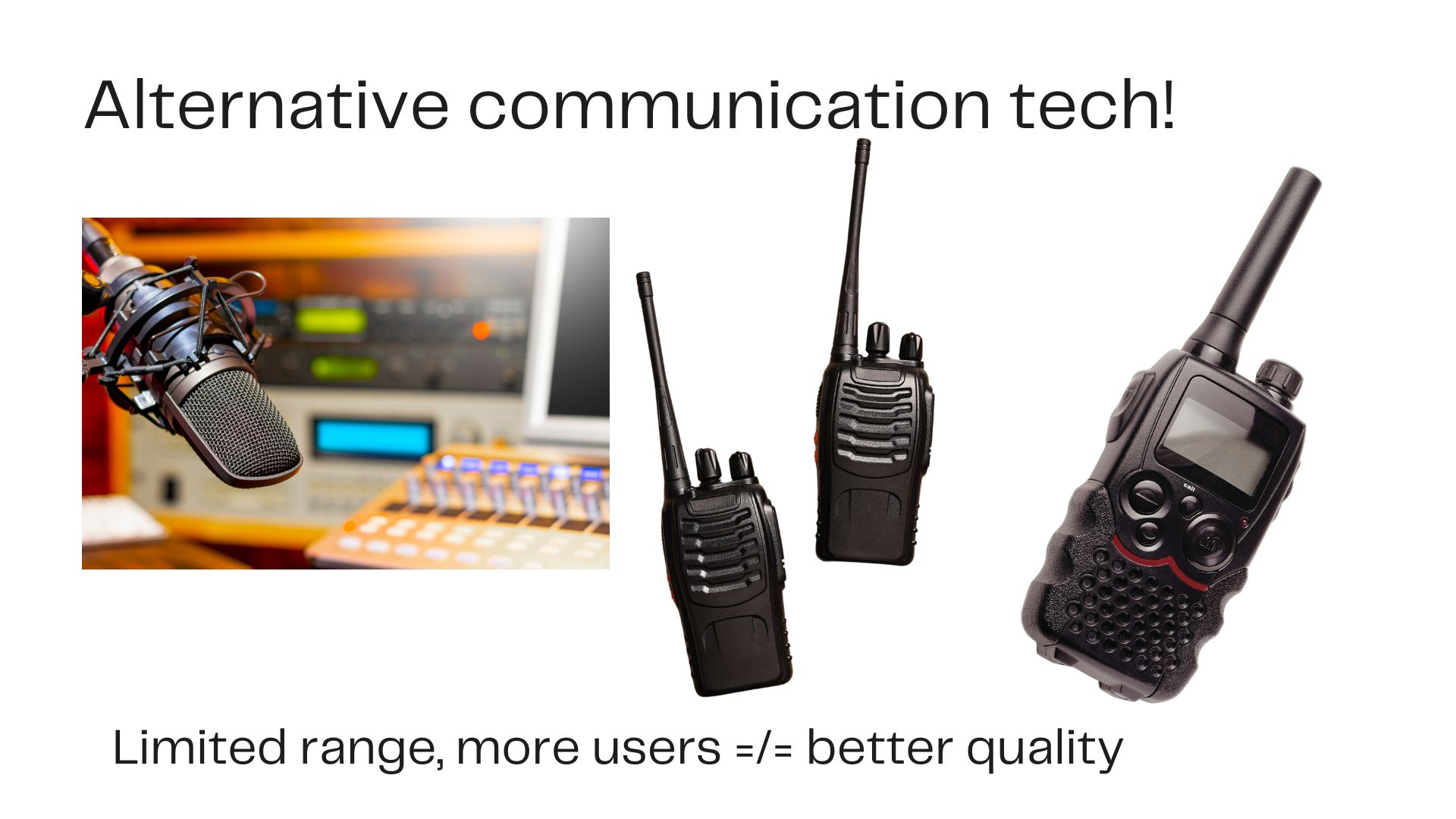
So we look at the old standbys. HAM radio — great range, but you need a license, and it's mostly voice. Walkie-talkies — easy to use, very limited range. FRS, GMRS, all that — same trade-off.
The thing all of these have in common: they don't get better as more people join. Traditional radio actually gets worse with more users — more interference, more congestion. So we needed something that flips that script.
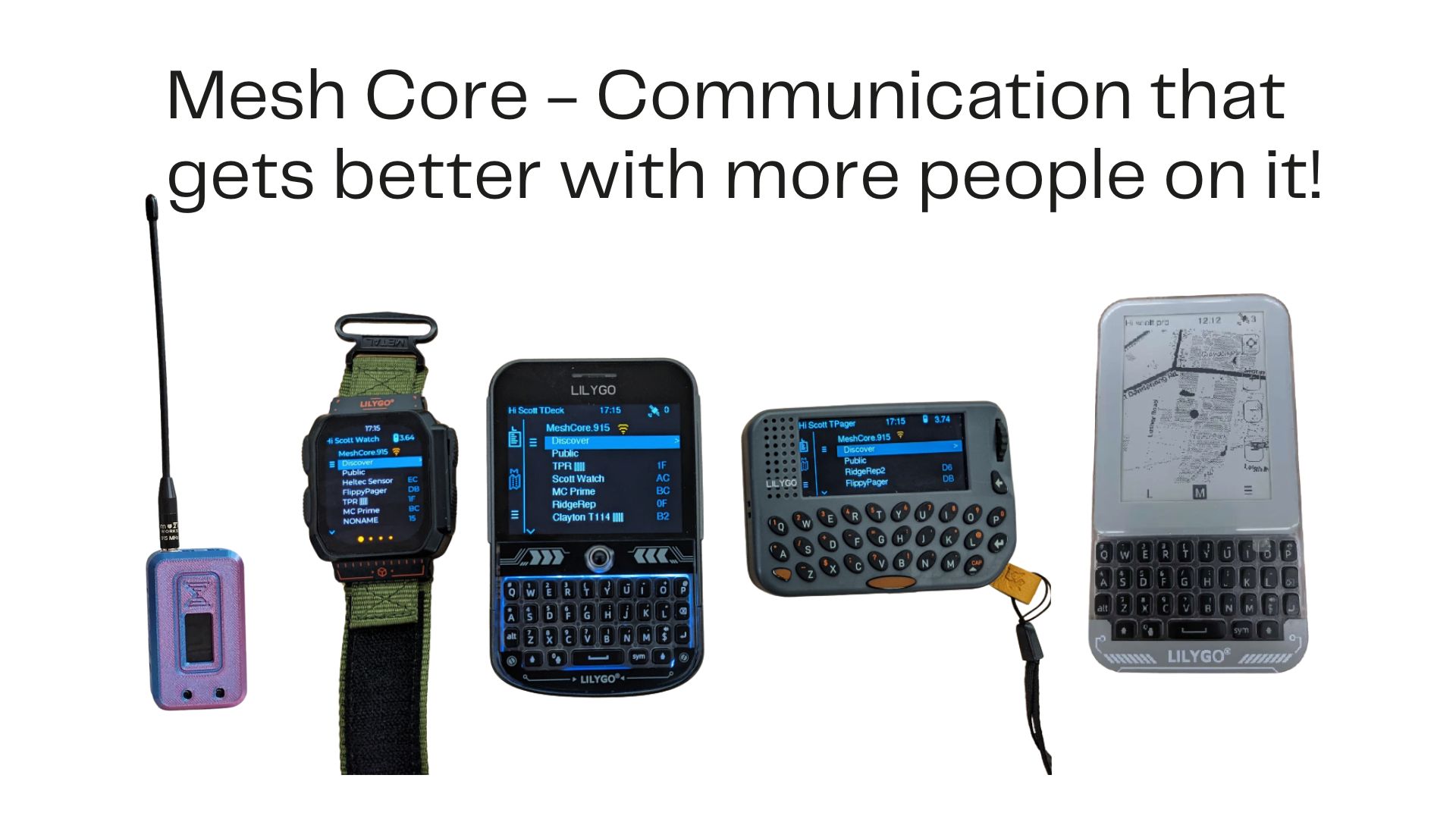
Enter MeshCore. These are some of the devices that run it — that little pink one is a TX/RX module, then a watch, a couple of T-Decks with full keyboards, and an e-paper version on the right. They all use long-range radio chips called LoRa. But the magic is in the protocol.
Every device on a MeshCore network is also a relay for every other device. So when I send a message across town, it hops from my radio to my neighbour's, to their neighbour's, to the destination. More people who join = more hops available = further messages can travel. It's the opposite of traditional radio. More users = better network.
The way I like to picture it: each radio is a runner in a relay race, passing a baton. Your message is the baton. None of the runners need to know the whole route — they just need to know who to pass it to next.
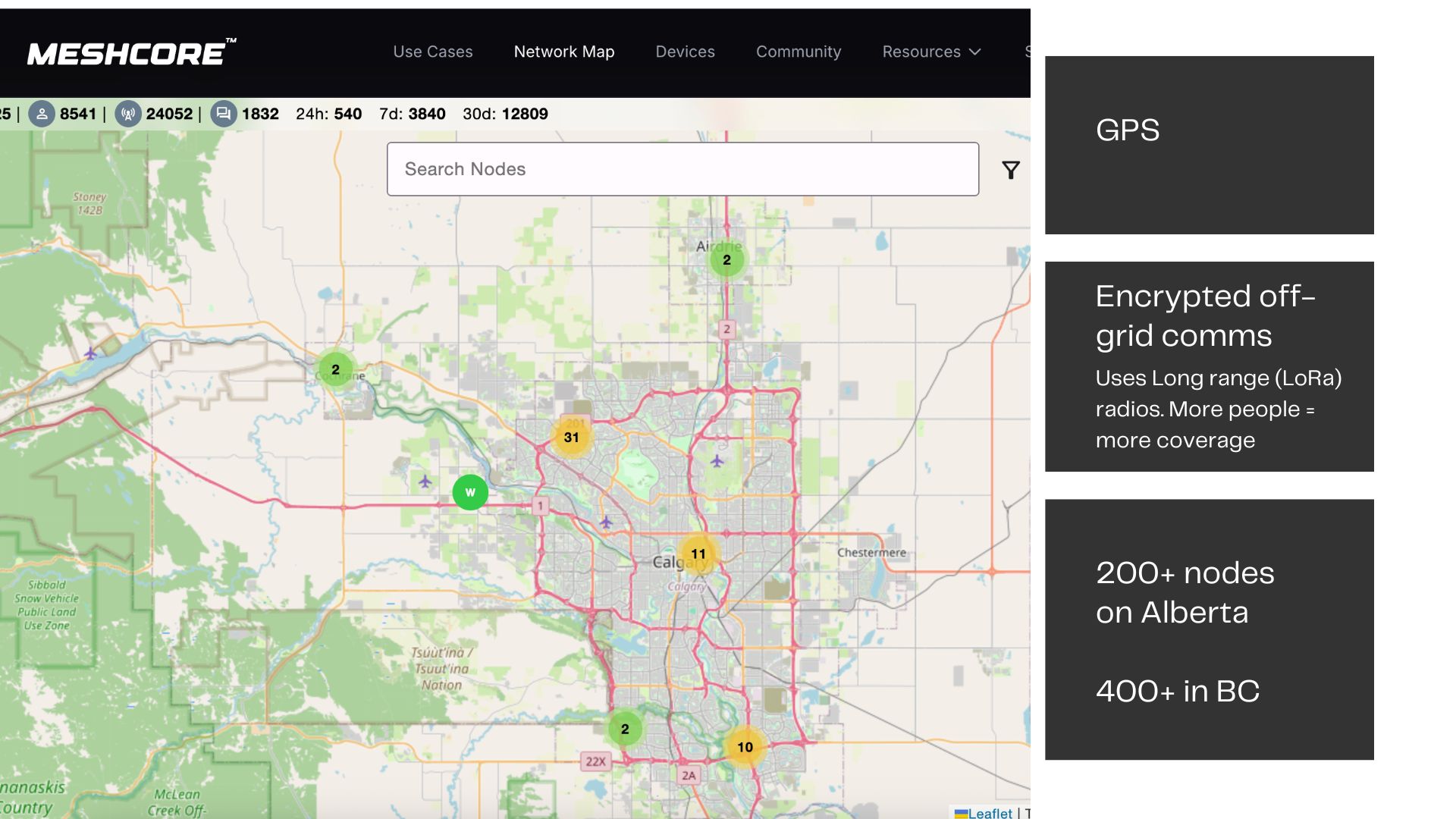
This is the live MeshCore network map for our region. Those little circles are real, active nodes. Look at Calgary — clusters all over the city, plus dots scattered through Cochrane, Airdrie, Chestermere. Alberta has 200+ active nodes right now. BC has over 400.
Every one of those is GPS-trackable, encrypted, and operating completely off the cellular grid. This is a real thing happening in real time.
And it doesn't stop at the border. Look at this: 1,204 nodes in the Seattle area, 470 in Portland, 400 around Vancouver. The networks are dense enough that — in theory, with the right relay path — someone in Vancouver could send a message all the way down to Portland without ever touching the internet.
That blew my mind the first time I saw it. There's a parallel network already running over our heads, all the way down the west coast.
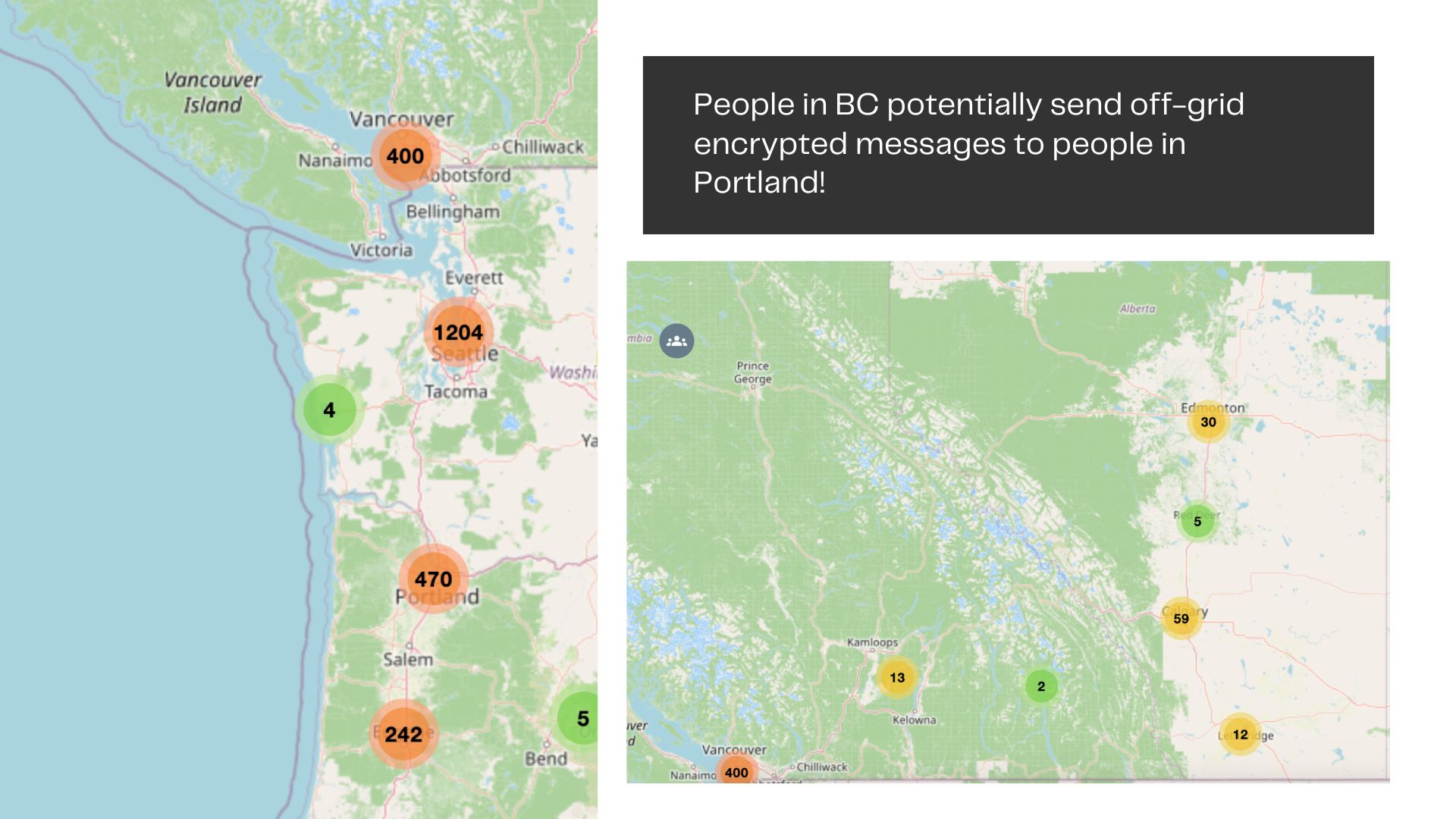
And here's the thing the relay runners don't know: what's actually written on the baton. MeshCore wraps every message in AES-256 end-to-end encryption. The relays carry the message, but only the sender and the intended recipient can read it. Even if I'm physically holding your baton in my radio for half a second on its way through, your secret is safe.
Quick recap of why we'd even want this:
Resilience and reliability — local networks don't care about cellular outages or grid failures.
Energy independence — pair a node with a small solar panel and you've cut the cord entirely.
Access in remote areas — places where extending the national grid will never make economic sense.
Emergency communication — first responders, search and rescue, disaster zones.
Control and privacy — your data isn't being mined by a third party. It's just yours.
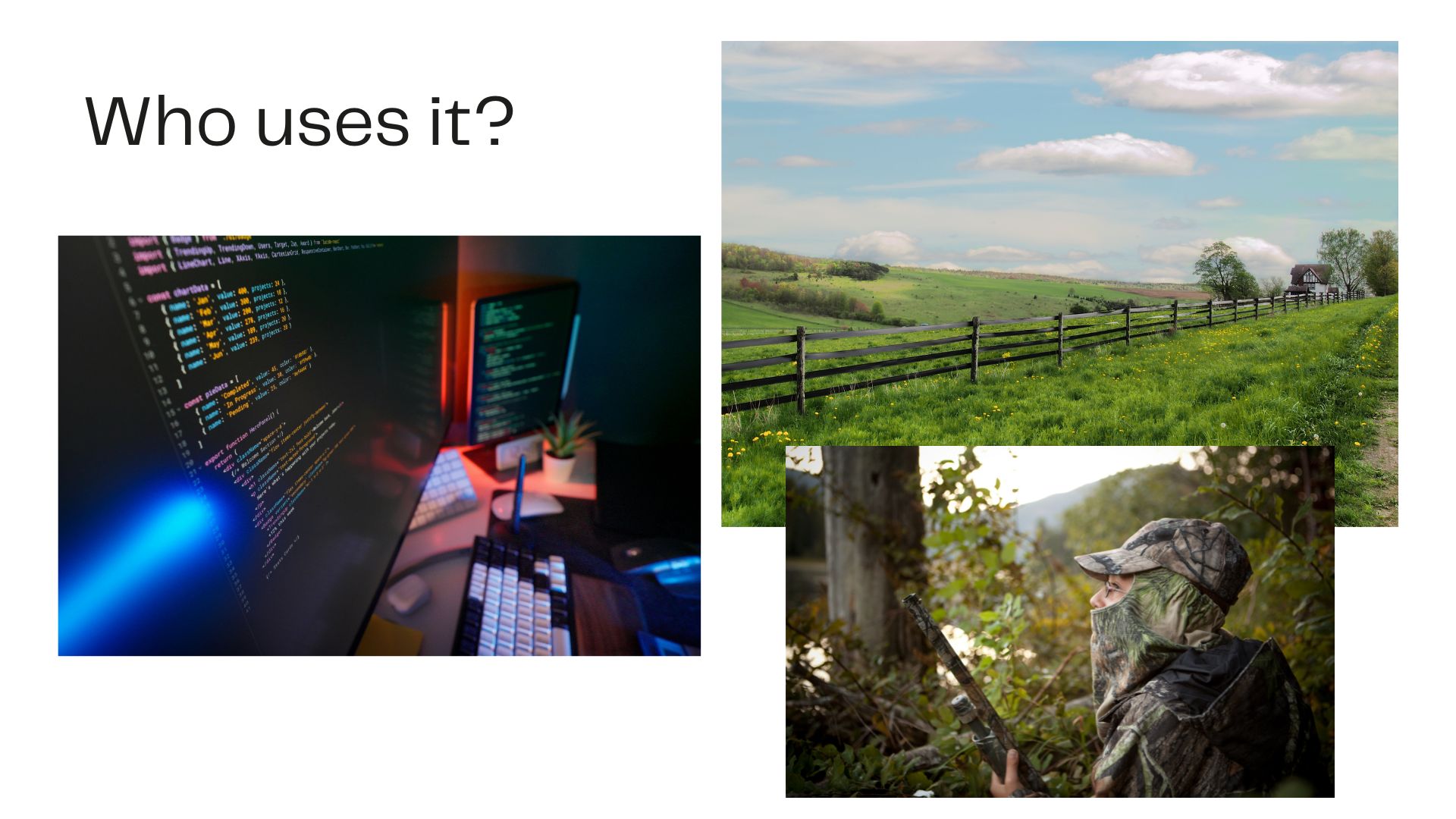
So who's actually doing this? Honestly, two crowds. There's the tech-curious — the makers, the open-source folks, the cybersecurity people who like knowing how things work and don't trust having all their eggs in the cellular basket.
And then there's a really practical crowd — hunters, ranchers, people in rural Alberta who've been frustrated for decades that they have no signal at the back of their property. For them, this isn't a hobby. It's actual working infrastructure.
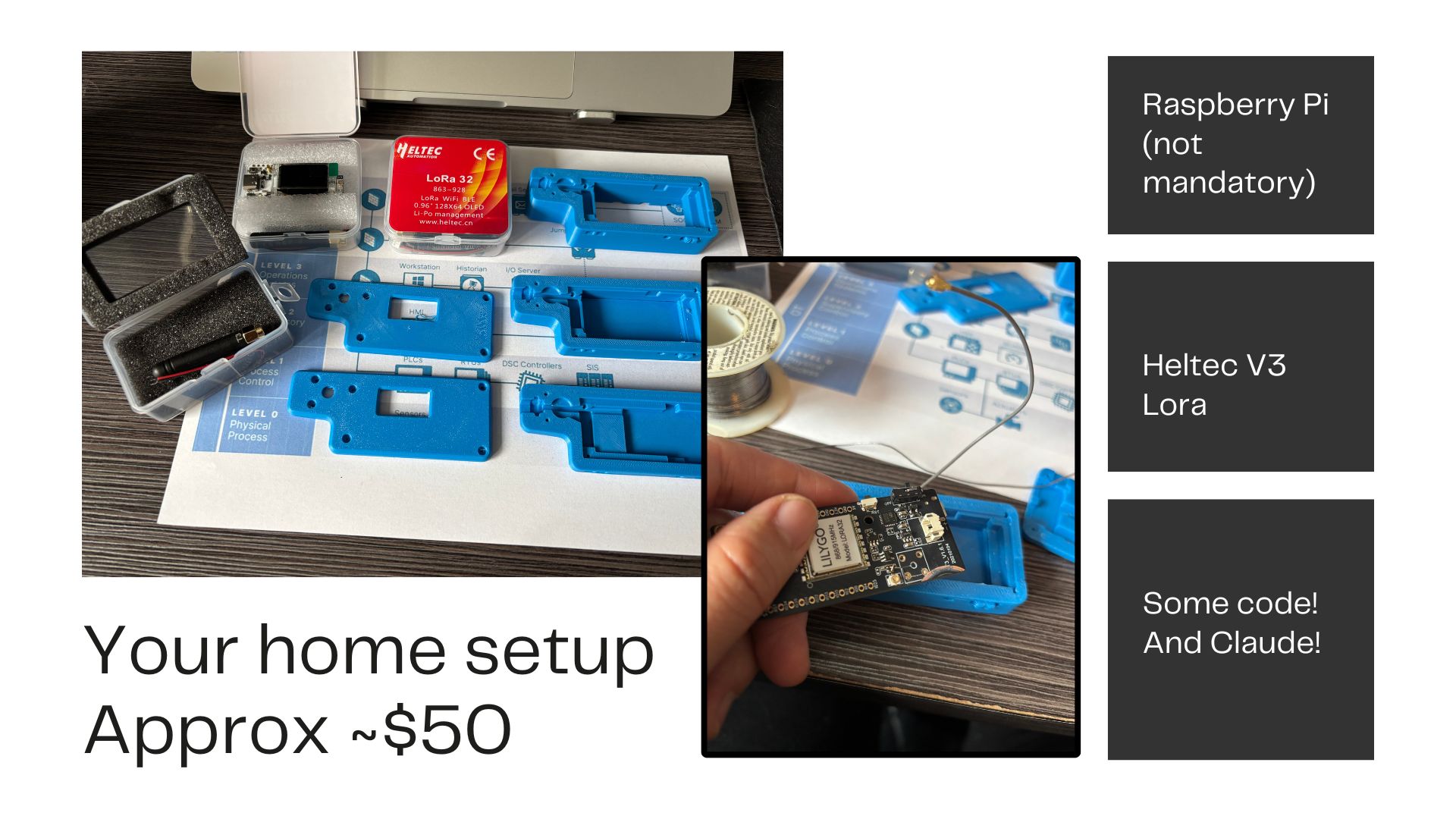
The barrier to entry is shockingly low. You need a Heltec V3 LoRa board — about $20-30. Optionally a Raspberry Pi if you want to run it 24/7 as a relay node, but it's not mandatory. And then some code — which, honestly, Claude helped me write a lot of.
Fifty bucks and an afternoon. That's it. You've got a node on the network.
Okay. Now we get to the part I'm most excited about.
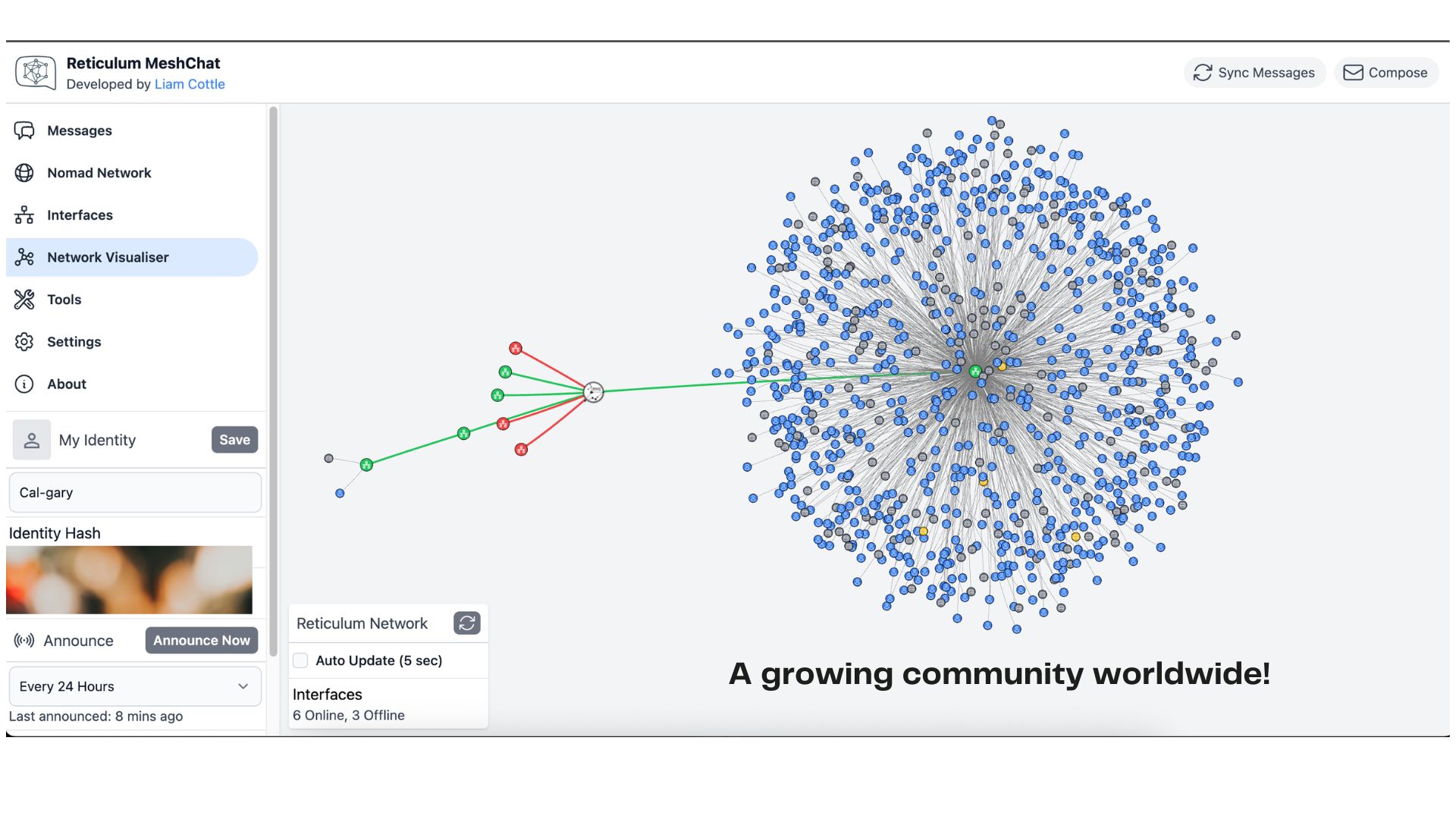
MeshCore is great, but it's mostly text messaging. Reticulum asks a bigger question: what if we could build a network that runs on any hardware — not just LoRa radios, but Wi-Fi, packet radio, even spare USB cables — and what if that network could carry not just text, but a tiny mini-internet? Web pages. File transfers. Voice. Whatever.
Reticulum is transport-agnostic. It doesn't care what's underneath. It just needs something to bounce packets across.
Here's the cool part: Reticulum can ride on top of a MeshCore network. The same physical radios I just showed you, doing their relay-runner thing, can also carry Reticulum traffic. We bridge the two — and suddenly that mesh isn't just a chat network. It's a mini-internet.
I'm here at Maker Faire partly because I want to find more Calgarians who'd like to set up a node at home and join in. Every new node makes the whole thing more useful for everyone else.
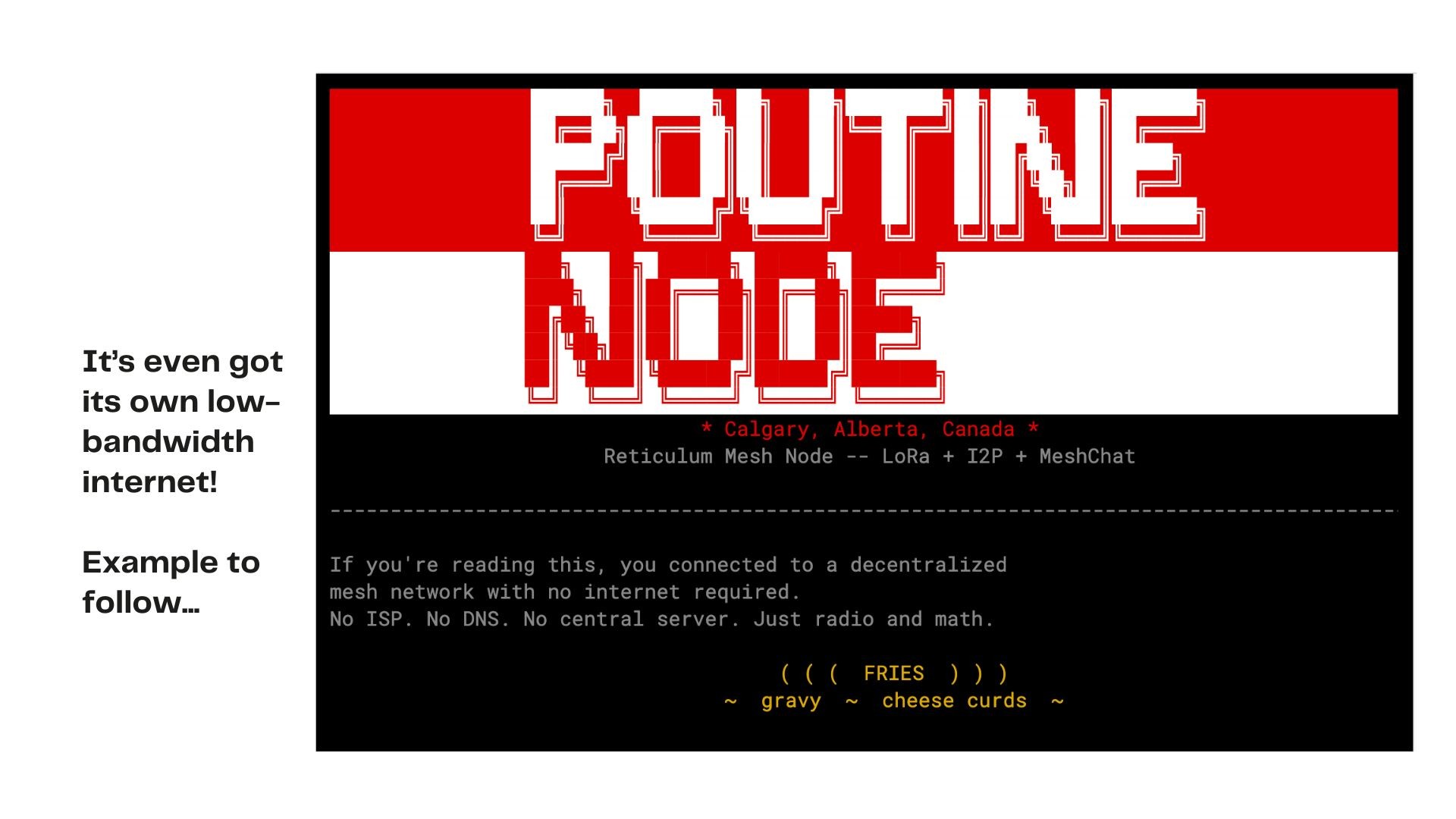
And finally — yes — my node has a name. It's called Poutine Node, because we're in Canada, and because if you connect to it through Reticulum you can actually browse a tiny site I've put together.
No ISP. No DNS. No central server. Just radio and math. And, apparently, fries.